Social Media & Your Mental Health

Social media is a huge part of life for many teens. It helps us stay connected with friends, discover new interests, laugh at funny videos, and express ourselves. It can be a great place to learn, find support, and build communities with people who share similar experiences.
But sometimes, social media can start to affect our mental health without us even realizing it.
It's easy to get caught up in likes, followers, comments, streaks, and views. You might find yourself comparing your appearance, accomplishments, friendships, or lifestyle to what you see online. The problem is that social media usually shows people's best moments... not the difficult days, mistakes, insecurities, or struggles happening behind the scenes. Comparing your everyday life to someone else's highlight reel can leave you feeling like you're not good enough, even when that's far from the truth.
Words online can also carry a lot of weight. A negative comment, being left out of a group chat, or seeing hurtful posts can affect your confidence and mood. On the other hand, constantly looking for approval through likes or comments can make your self-worth feel tied to what other people think.
The truth is, your value is not determined by what happens on a screen.
You are so much more than your follower count, your latest post, or how many people viewed your story.
Here are some questions to ask yourself while maintaining your mental health on social media:

One of the healthiest things you can do is create a balance between your online life and your real life. Take breaks from scrolling, spend time with family and friends, enjoy hobbies, get outside, exercise, read, create art, play sports, or simply be present in the moment. Building an identity outside of social media helps remind you that there is a whole world beyond your phone.
It's also important to think about who you're following. If certain accounts constantly make you feel anxious, insecure, or like you're not enough, it's okay to unfollow, mute, or limit them. Protecting your peace isn't being rude. It's taking care of your mental health.
Most importantly, if social media is making you feel overwhelmed, isolated, bullied, or unsafe, don't keep those feelings to yourself. Talk to someone you trust, whether that's a parent, family member, teacher, school counselor, coach, or another trusted adult. Asking for help is a sign of strength, not weakness.
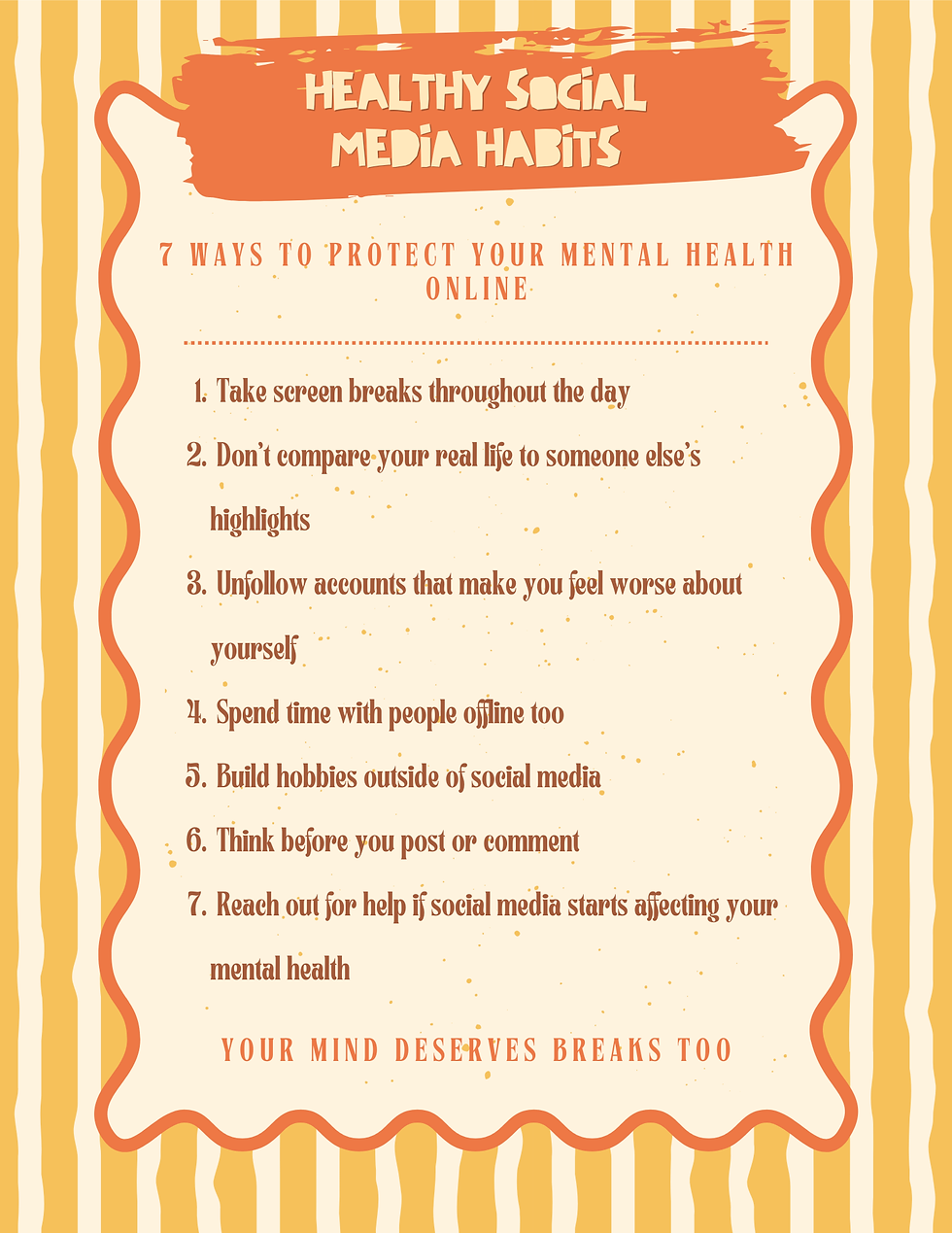
Here are some healthy habits to keep in mind while being online...
Something to remember...
Social media is just one small part of your life... it should never become your entire world. The most important parts of who you are can't be measured by likes or followers.
Your kindness, talents, character, goals, and the relationships you build in real life are what truly make you who you are.
Your online profile is only a snapshot of your life. The real you is so much bigger, stronger, and more valuable than anything that could ever fit on a screen.


Comments